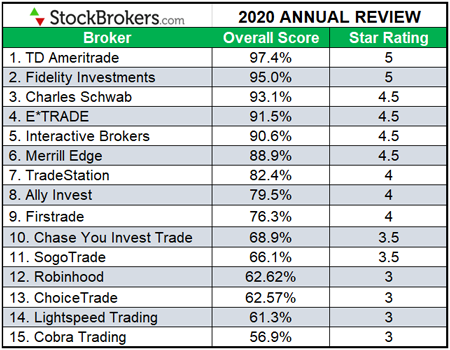
Interactive Brokers has multiple pricing options depending on your level of trading activity and personal trading needs. The combination of low fees and a focus on helping investors reach a successful retirement helped make it the top choice for retirement brokerage accounts. Despite Charles Schwab’s overall affordability, certain online brokerage accounts, products, and features are more expensive. Schwab online brokerage accounts provide convenience and affordability (with commission-free trades of stocks), ETFs, and options. Lots of different brokerage accounts will provide you with different things, so it’s a matter of specifically what it is that’s important to you. The most important factors for Personal Finance Insider’s ratings and reviews of products are pricing, account types, investment availability, platforms, and overall customer experience.
Fidelity earns strong marks for its educational tools and customer service options (including a network of more than 200 branches for in-person advice and educational options), and 24/7 phone, chat and email support. To keep our service free, we receive compensation from the companies whose products or services we feature on our site. Finder is a comparison platform and information service designed to help you make better decisions.
This pricing strategy enhances cost transparency — enabling traders to understand the precise charges applied to their trades upfront. One of their security measures is the segregation of clients’ funds — meaning your investment is safe in the event the bitcoin fear and greed index broker goes bankrupt or other related issues. This dedication to providing comprehensive support and maintaining a secure trading platform demonstrates XTB’s commitment to its clients’ trading success. Moreover (XTB places a high priority on customer service), offering 24/5 support via phone, email, and live chat. XTB understands the importance of cost transparency in building long-term relationships with its clients.
Robinhood offers an intuitive, easy-to-use trading platform that is popular with new and experienced investors alike. Users can choose from more than 5,000 stocks and 2,000 funds and practice with $100,000 in virtual money through its simulated trading feature. Acorn subscriptions range from $4 to $12 per month — a relatively high cost for investors with small balances — and the platform offers fewer self-directed trading tools than our top picks. Acorns is designed for people who want to build an investing habit with minimal effort.
SoFi’s application provides a broader array of financial products and services—such as banking (mortgages), insurance, and student loans—unlike many brokerage firms that may offer more restricted options. Aimed primarily at less experienced and younger investors — the interface prioritizes ease of use and simplicity over a wide array of advanced tools. For an annual fee of 0.25% on assets under management, SoFi’s robo-advisory services will develop a portfolio tailored to your individual or multiple goals and will automatically adjust it over time as needed. Beginner and intermediate investors will find IBKR Lite to be the most appropriate option, as it provides unlimited commission-free trading for stocks and ETFs listed in the U.S., along with fixed pricing for options, mutual funds, futures, and non-U.S.-listed stocks and ETFs.
Investors benefit from strong platforms (broad product availability), responsive service and competitive options pricing, creating an experience that appeals to both new and experienced investors. While an increasing number of firms now offer commission-free stock and ETF trading, Questrade remains the category benchmark by pairing competitive pricing with industry-leading digital experiences and service performance. As we’ve often said, free trading is great—but it shouldn’t be the only reason you choose a brokerage. The best firms in this category combine competitive pricing with strong platforms, useful tools, educational resources and dependable service. With competitive pricing now added to the equation, the firm has further strengthened its position as a compelling choice for experienced self-directed investors.
RoboForex is regulated by the Financial Services Commission (FSC) in Belize and follows the international anti-money laundering policy. This detailed overview is designed to offer insights into what makes each broker unique. Now, we’ll explore the standout features of these top 10 online trading brokers, evaluating their trading platforms, fee structures, and overall user experiences. After reading this guide, you’ll know more about the best 10 brokers and what criteria to consider when choosing a suitable option.
Interactive Brokers – Best for professionals and active traders
Webull will appeal to the mobile-first generation of casual investors with its slick interface for desktop and mobile apps. If you’re new to investing and want the extra support, that kind of offering can be enticing. It also stands out for its top-notch research tools, a renowned trading platform and very strong customer service. You may expect a legacy broker like Fidelity to have a lackluster mobile app, but it’s far from it. Fidelity routinely tops our list of the best brokers and scores well in every category, but our team found it to be an especially good fit for beginners and mobile-first users.
Annual fee $0 per month Minimum deposit $0 Signup bonus Get up to $1,000 in stock Annual fee $0 per month Minimum deposit $0 Signup bonus Get 12 free shares by joining Webull For an added monthly fee (Webull Premium includes extra perks like a 3.35% APY cash account), a 3.5% IRA match and discounted futures commissions. My first impression of Webull was that the interface can feel overwhelming — there’s a lot packed into every screen.
To choose the best brokerage firm, start by looking at your investment style and what you want from a brokerage. Everyone’s investment goals and preferences are unique, and not all brokerage accounts fit perfectly. Margin brokerage accounts are similar to cash accounts but invest in funds using borrowed money , up to 50% of the investment’s purchase price, rather than cash. You can have multiple brokerage accounts, and different types of brokerage accounts serve different purposes.